
Everyone expects you to be glowing and blissful. And sometimes you are. And sometimes you are lying awake at 3am convinced something is wrong, running through every possible scenario, unable to turn your brain off.
Pregnancy anxiety is far more common than people talk about. One in five pregnant women experience it at a clinically significant level. It is not a sign that something is wrong with you. It is a sign that you care deeply about something very precious. This guide has the strategies that actually help.
"Anxiety in pregnancy doesn't mean you're not grateful. It means your nervous system is working hard to protect the most precious thing in your world."
Why does pregnancy anxiety happen?
Pregnancy hormones directly affect the parts of your brain that manage fear and stress. Progesterone and oestrogen swings can amplify anxiety, especially in the first trimester when everything is surging at once. Add to that the very real uncertainties of pregnancy — your baby's health, your finances, how your relationship will change, what birth will actually be like — and anxiety makes complete sense.
For first-time mamas the unknown can feel enormous. For anyone who has experienced pregnancy loss, hypervigilance and fear are completely understandable responses. Wherever your anxiety comes from, it is valid and it deserves to be taken seriously.
Common triggers during pregnancy
Knowing what specifically triggers your anxiety makes it easier to address. These are the most common ones during pregnancy:
- Fear of miscarriage — particularly in the first trimester before the 12-week scan
- Worries about the baby's health — especially after screenings or if there have been complications
- Financial concerns — the cost of a baby can feel overwhelming
- Relationship changes — wondering how your partnership will cope with a newborn
- Fear of birth — a very common concern that tends to intensify in the third trimester
- Body image — the rapid physical changes of pregnancy can be difficult to adjust to
- Work and career — concerns about maternity leave, returning to work, and career impact
Once you know what is driving the anxiety, you can address it more specifically — whether that is getting more information, talking to your midwife, or finding professional support.
Natural strategies that actually work
1. Breathwork — your nervous system's reset button
Slow deep breathing is genuinely one of the most effective tools for anxiety and it works within minutes. Box breathing is simple: inhale for 4 counts, hold for 4, exhale for 4, hold for 4. Repeat 5 times. You can do it at your desk, in the car, in bed at 3am. Nobody even knows you are doing it.
The 4-7-8 technique is also excellent: inhale for 4, hold for 7, exhale for 8. That long exhale is what activates the calming response in your nervous system. Practice it daily rather than only when you are already anxious and it builds genuine resilience over time.
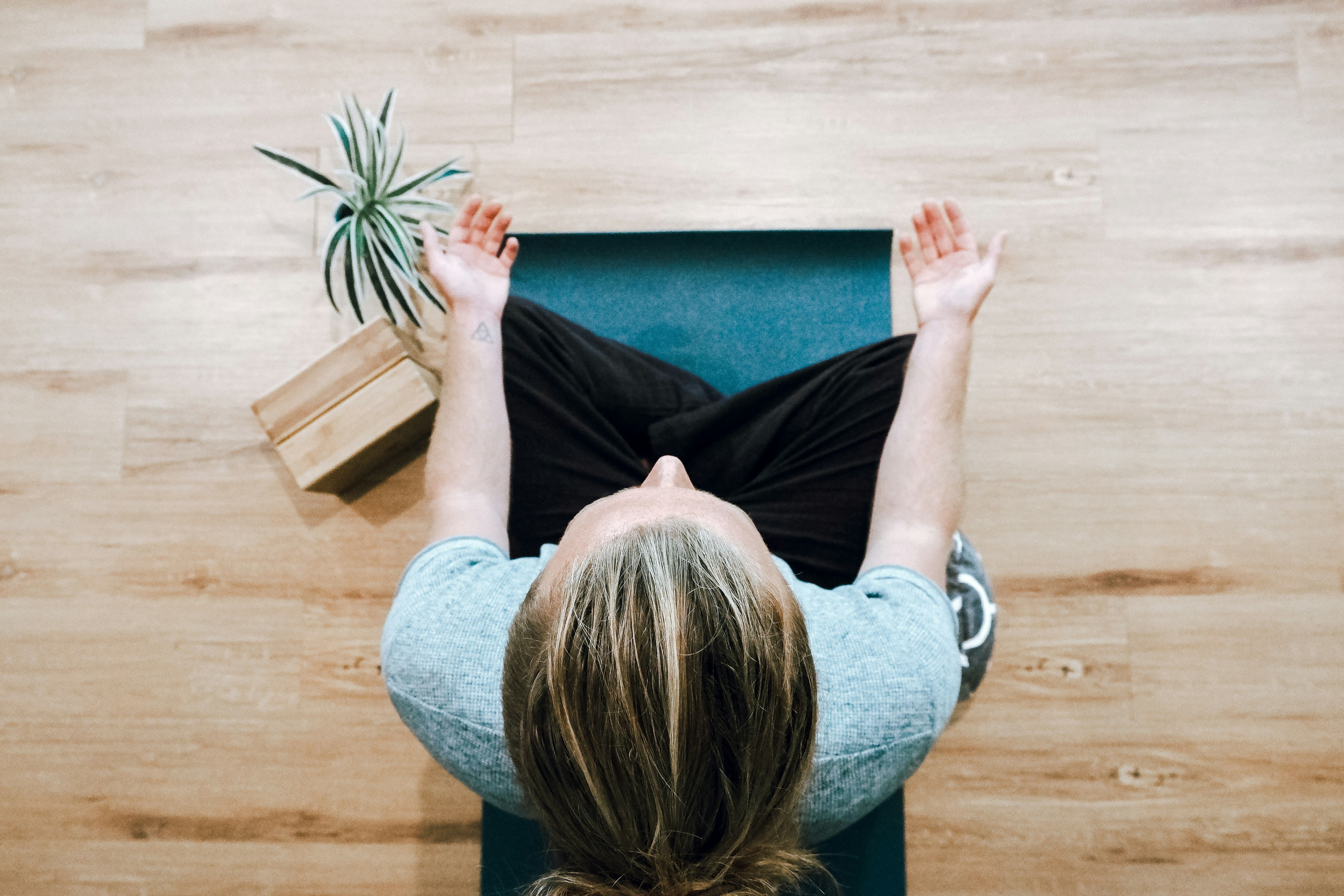
2. Prenatal yoga
Prenatal yoga consistently comes up in research as one of the most effective tools for pregnancy anxiety. It combines breathwork, movement, and mindfulness in one practice — which is basically hitting all the highest-impact anxiety strategies at once. Even one session a week makes a measurable difference. If classes are not accessible or affordable for you right now, there are excellent free prenatal yoga videos online. Fifteen minutes before bed is enough to make a real difference to your anxiety and your sleep.
3. Magnesium supplementation
Magnesium is one of the most important minerals for a calm nervous system, and many pregnant women are deficient due to the increased demands of pregnancy. Ask your midwife or doctor about magnesium glycinate or magnesium citrate supplements — they're gentle on the stomach and highly absorbable. The glycinate form is particularly well-tolerated and crosses the blood-brain barrier effectively.
A warm bath with magnesium flakes or Epsom salts is also wonderfully calming. The magnesium is absorbed transdermally through the skin, providing both physical relaxation and nervous system support. Aim for 20 minutes in a warm (not hot) bath, two to three times per week.
4. Limit news and social media
Anxiety feeds on uncertainty and worst-case scenarios — and social media and news feeds deliver both in endless supply. The algorithm is specifically designed to show you content that provokes an emotional reaction, which often means fear and outrage. Consider a daily time limit for screens, especially in the hour before bed.
Be particularly careful about pregnancy forums and groups where anxious mamas share their worst experiences. While community support is valuable, consuming a constant stream of pregnancy complications and horror birth stories will not serve your mental health. Curate your feeds ruthlessly.
5. Nature and gentle movement
Research consistently shows that spending time in nature reduces cortisol levels and calms the nervous system. A 20-minute walk in a park, garden, or along a beach is a genuine, evidence-backed anxiety treatment — comparable in some studies to low-dose anti-anxiety medication. It also supports healthy sleep, reduces back pain, and prepares your body for labour.
If walking is uncomfortable, simply sitting in a garden or park and engaging your senses — noticing the sounds, smells, textures, and sights around you — activates the same calming response. This practice, sometimes called grounding or earthing, is remarkably effective for acute anxiety.
6. Journalling and worry scheduling
Writing down your worries can help externalise them — getting them out of your head and onto paper where they feel more manageable. Try keeping a worry journal beside your bed and writing down any anxious thoughts before sleep, along with a brief note about what action (if any) you can take.
Worry scheduling is a powerful cognitive technique: designate 15 minutes per day as your official "worry time." When anxious thoughts arise outside this window, acknowledge them and postpone them to your designated time. This prevents anxiety from spreading across your entire day.
Pregnancy Journal
A beautiful guided pregnancy journal with weekly prompts, space for thoughts and feelings, and letters to your baby. Writing regularly is one of the most effective tools for managing pregnancy anxiety.
View on Amazon → As an Amazon Associate we earn from qualifying purchases at no extra cost to you.7. Talk to someone you trust
Anxiety thrives in silence. Talking to a trusted friend, your partner, a midwife, or a counsellor about your fears can dramatically reduce their power. Often, simply articulating a fear out loud reduces its intensity — it's much harder for catastrophic thoughts to maintain their grip once they've been spoken.
If you don't feel you can talk to someone in your life, many areas have free or low-cost pregnancy counselling services. Your GP or midwife can refer you. Online therapy platforms have also made counselling more accessible than ever before.
The connection between sleep and anxiety
Anxiety and poor sleep create a vicious cycle — anxiety makes it harder to sleep, and sleep deprivation amplifies anxiety. Prioritising sleep hygiene during pregnancy is therefore one of the most effective things you can do for your mental health.
Practical sleep supports include: keeping a consistent sleep schedule, using a pregnancy pillow for physical comfort, keeping your bedroom cool and dark, avoiding screens for at least an hour before bed, and practising a calming bedtime routine. If you wake with anxious thoughts in the night, keep a notepad beside the bed to write them down rather than ruminating.
Nutrition for a calmer pregnancy
What you eat has a direct impact on your mood and anxiety levels. Key nutritional supports for a calmer nervous system include:
- Omega-3 fatty acids (found in oily fish, walnuts, and flaxseeds) — support brain health and reduce inflammation linked to anxiety
- B vitamins (found in whole grains, eggs, leafy greens) — essential for neurotransmitter production
- Magnesium (found in dark chocolate, nuts, seeds, leafy greens) — the calming mineral
- Probiotic foods (yogurt, kefir, sauerkraut) — the gut-brain connection is powerful; a healthy gut microbiome supports positive mood
- Complex carbohydrates — stabilise blood sugar, which prevents the anxiety spikes associated with hypoglycaemia
Conversely, minimising caffeine, refined sugar, and alcohol (which should be avoided entirely in pregnancy) can significantly reduce anxiety levels.
When to seek professional help
While these strategies are powerful, they're not a substitute for professional care if your anxiety is significantly impacting your daily life. Signs that it's time to reach out for extra support include:
- Panic attacks — sudden episodes of intense fear with physical symptoms
- Inability to eat, sleep, or function in daily life
- Intrusive, unwanted thoughts that you can't control
- Anxiety that doesn't respond to self-care strategies
- Feeling constantly on edge, unable to relax
- Avoiding medical appointments out of fear
Your mental health matters as much as your physical health during pregnancy. Seeking help is not weakness — it is the most loving thing you can do for yourself and your baby.
Get your free personalized plan
Week-by-week eco pregnancy guide covering all 40 weeks — including mental wellness guidance — completely free, no sign-up required.
Create my free plan →